Standby Generator Install with Buried Propane Tank
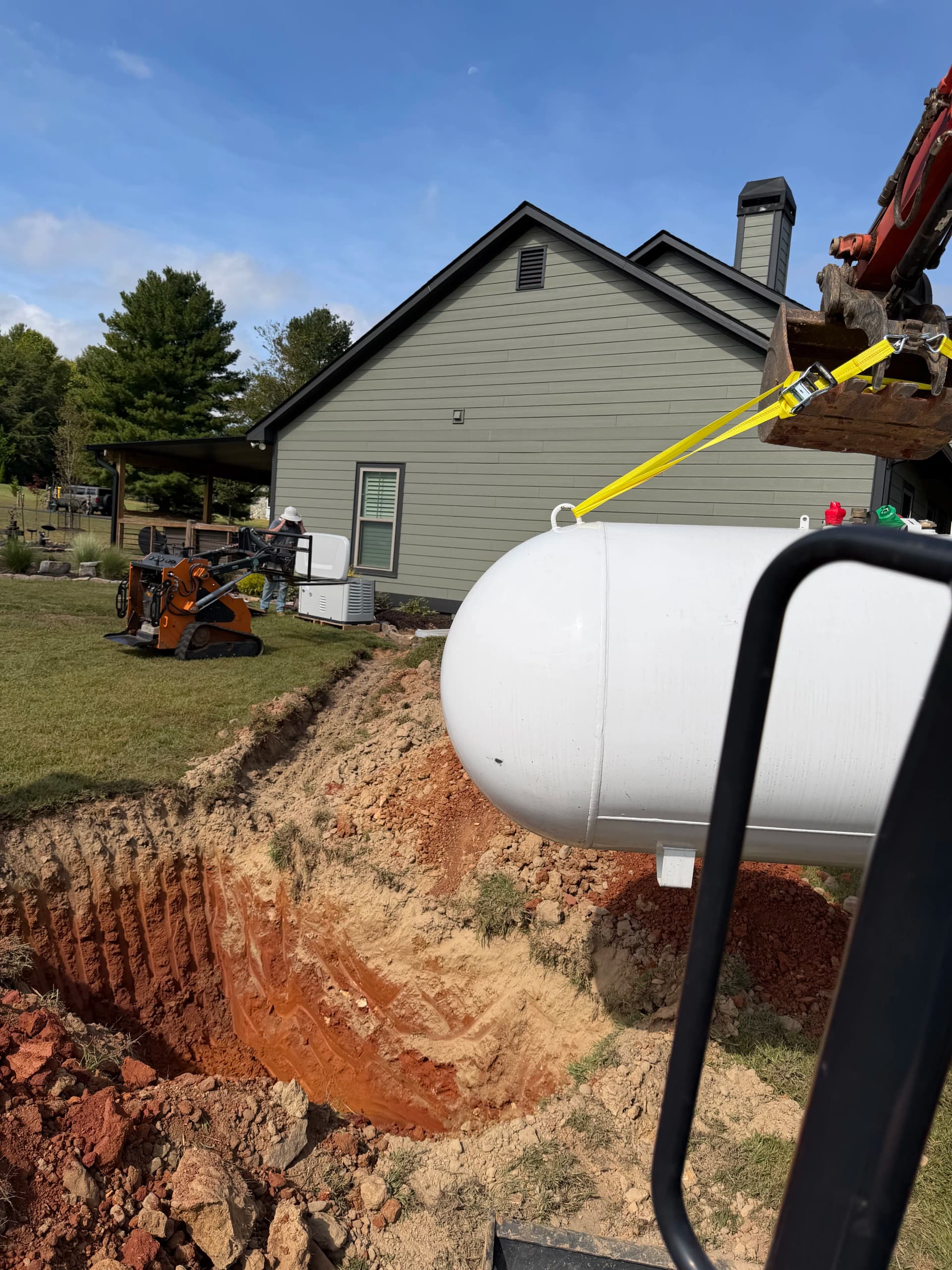
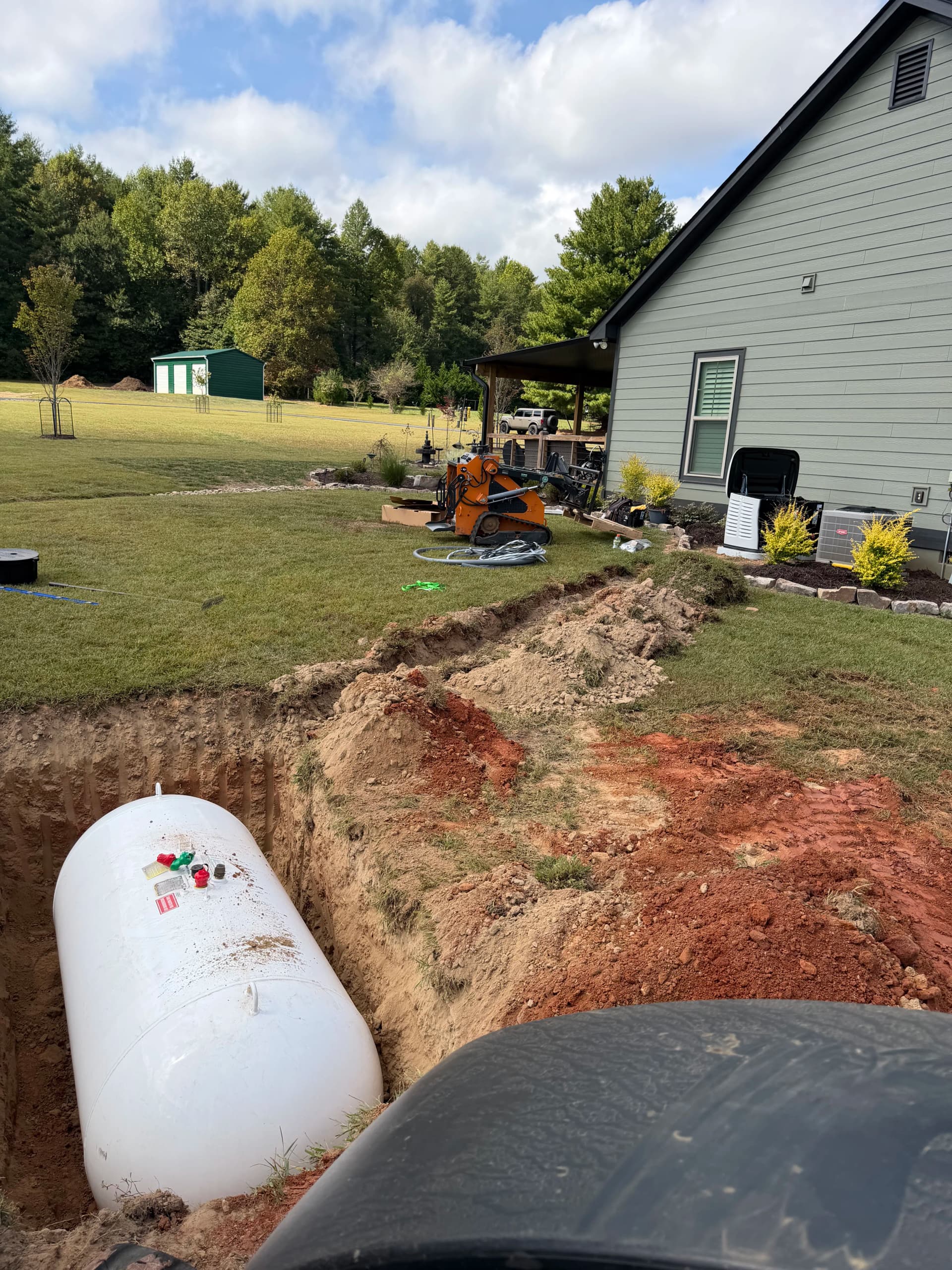
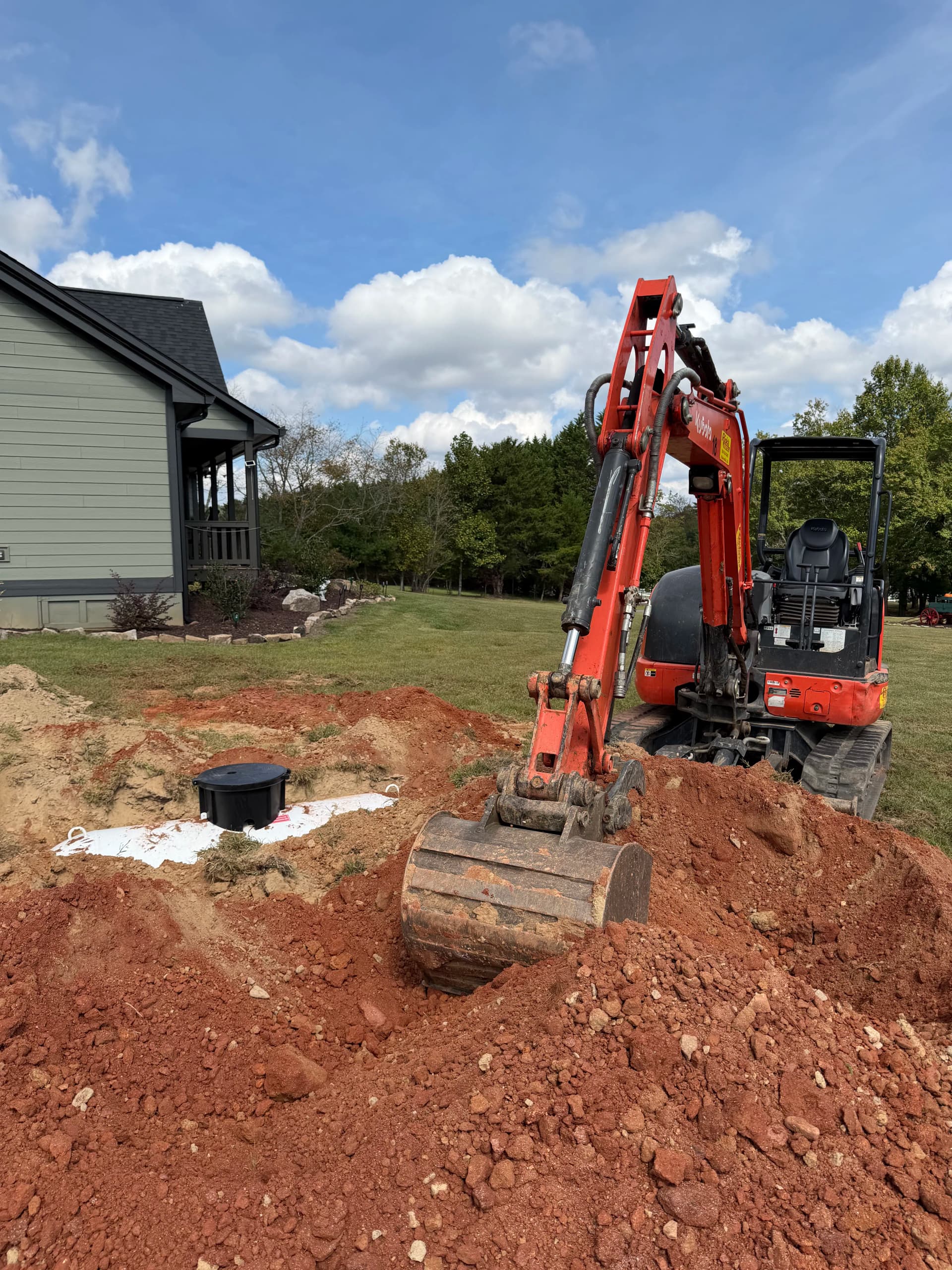
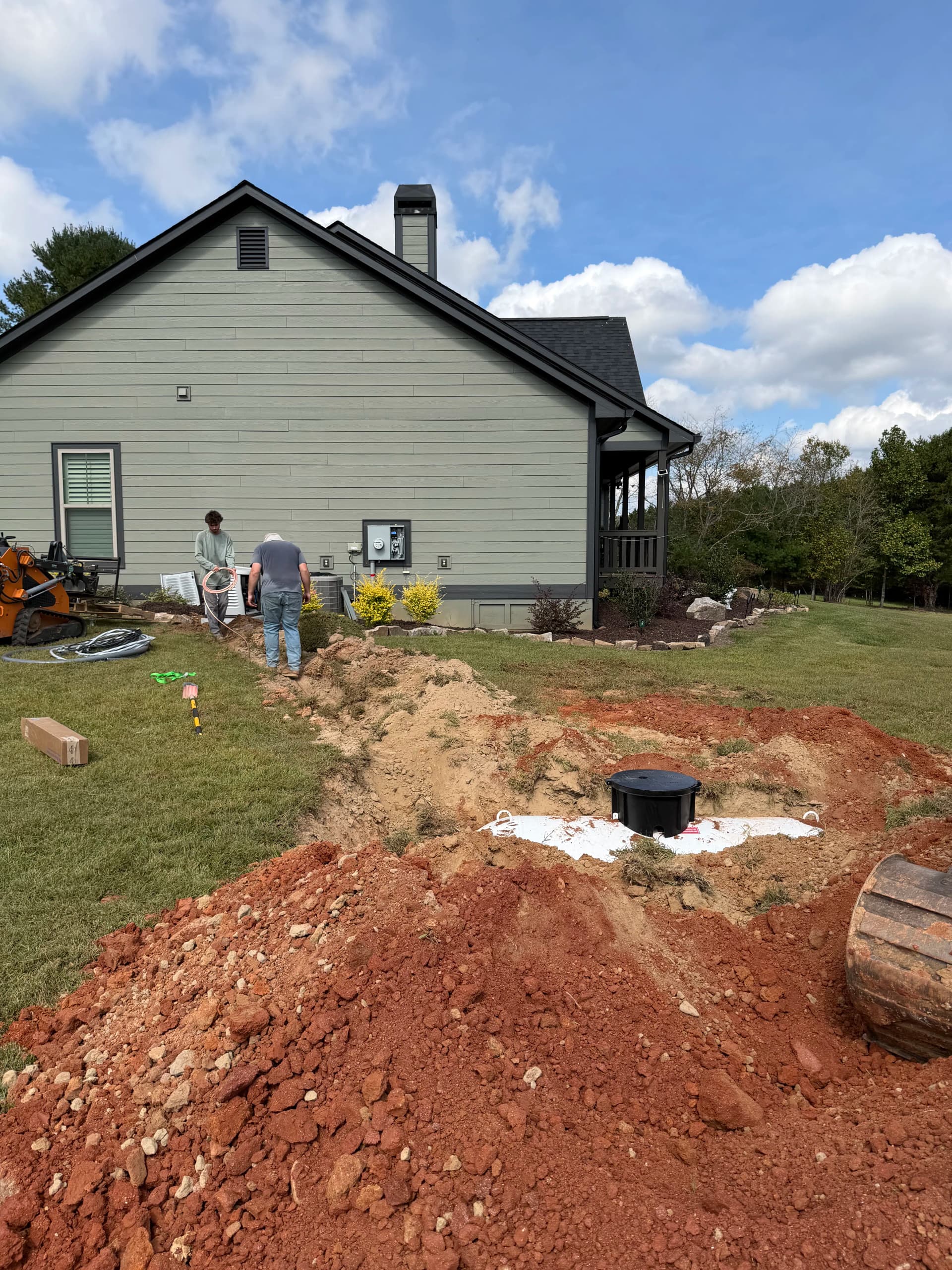
Power outages don't care about your schedule. They hit in the middle of the night, in bad weather, and always at the worst time. This homeowner wanted a real solution - not a portable unit you have to haul out of the garage, but a permanent standby system that kicks on automatically when the grid goes down.
Here's what the job involved. We excavated a trench running across the yard, lowered in a buried propane tank, and ran the gas line back to the house to feed the standby generator. The tank goes underground for a reason - it keeps the fuel supply out of sight, protected from the elements, and topped off by your propane provider on a regular schedule. No cans, no extension cords, no scrambling.
The generator unit itself is mounted right on the exterior wall of the home, next to a new transfer switch. That transfer switch is the key piece. It's what allows the generator to detect an outage and take over power automatically - usually within seconds. The homeowner doesn't have to do a thing.
A job like this takes real coordination. You've got excavation equipment, a skid steer, trenching, tank placement, gas line work, electrical connections, and final generator commissioning all happening in sequence. Every step has to be done right, because this isn't a system you want failing when you actually need it.
The end result is a home that's protected no matter what the grid does. Lights stay on. Heat and AC keep running. The fridge stays cold. For homeowners outside of town - especially on rural properties like this one - that kind of reliability isn't a luxury. It's just smart planning.